Hello everyone.
Thank you for visiting our website and for your interest in New York real estate among other real estate investments around the world.My name is Onodera and I am the president of the company.
In this article, we will explain what is the difference between the real estate market in New York City and other cities in the U.S., and from what perspective investors are investing, in each of seven points.
1. high international demand

The New York real estate market differs from the rest of the United States in several significant ways.
The first of these is that investors from all over the world are investing in the New York real estate market (not just in the US).
In particular, in the luxury condominium market, it is not uncommon for international buyers to account for 20-30% of all purchases[1], a figure that is noticeably higher than in other major cities such as San Francisco and Los Angeles.This high international demand is a major reason for the high number of international buyers.This high international demand is one of the most prominent characteristics of the New York real estate market.
Cited by: [1] Real Estate Board of New York (REBNY), Knight Frank”The Wealth Report 2023″.
According to Knight Frank’s “The Wealth Report 2023,” New York City is one of the most popular real estate investment destinations for ultra high net worth individuals (UHNWI) worldwide, with the percentage of international investors in the major cities as followsThe percentage of foreign investors in major cities is as follows
- New York: 28
- Paris: 18
- Los Angeles: 14
- San Francisco: 12%.
There are many factors that contribute to New York City attracting so many international investors.First, New York’s position as the center of the global economy.New York, with its Wall Street, continues to attract investors and companies from around the world as the center of international finance, and the location of the United Nations headquarters also contributes to its international demand.
In addition, New York is a city that attracts people from around the world for a variety of reasons, including tourism, business, and education.This diversity contributes to a steady demand for both short and long term rentals.There is a steady demand throughout the year for short stays by tourists (over 60 million annually) visiting from around the world, medium-term stays by business people, and long-term stays by international students and expatriate families.In addition, the name “New York” in itself has a strong presence in the city.
In addition, the international brand power of the name “New York” itself is reflected in real estate values.For people around the world, New York is a special city with an image of “the city of dreams” and “a symbol of success.This brand value adds value to your real estate investment and makes New York a city unlike any other.
2. price stability and upside (resilience)

Second, the New York real estate market tends to exhibit higher upside potential (and resilience following shocks) to economic shocks and market fluctuations and is less prone to price declines compared to many other cities.This feature makes them particularly attractive to long-term investors.
For example, after the 2008 financial crisis, real estate prices in New York recovered faster than in many other cities: according to the S&P CoreLogic Case-Shiller Index, between 2012 and 2019, New Yorkhome prices increased by nearly 50%, and this rate of increase is above the national average[2].Furthermore, the New York real estate market recovered relatively quickly from the temporary downturn caused by the 2020 pandemic.
Quote from : [2] S&P CoreLogic Case-Shiller U.S. National Home Price Index
Using data from the S&P CoreLogic Case-Shiller Home Price Index, the following table compares changes in the New York (NY metropolitan area) and national average home price indexes from January 2012 to December 2019.
- New York metropolitan area (NY) home price index:
- January 2012: 165.75
- December 2019: 248.18
- Rise: 49.73%
- National (US) Average Home Price Index:
- January 2012: 145.03
- December 2019: 212.59
- Rise: 46.58%
A chart visualizing these data is shown below.It shows that the rate of price increase is higher than the national average.

*Compiled by us based on data from the S&P CoreLogic Case-Shiller U.S. National Home Price Index
From this chart, we can read the following
- Home prices in New York City have increased by about 49.73% between 2012 and 2019, almost a 50% increase.
- The national average increase over the same period was 46.58%, with New York’s increase being higher.
- Especially since 2015, price appreciation in New York has grown faster than the national average.
I would say that there are several factors behind this difficulty in lowering prices.
- Scarcity: The limited supply of land, especially in Manhattan, makes real estate scarce and supports prices.
- Diverse Demand: The presence of diverse sources of demand, such as international investors, corporations, and students, has the effect of complementing other segments when some segments weaken.
- Economic Diversity: The concentration of diverse industries, such as finance, technology, media, and tourism, mitigates the overall impact of a downturn in a particular industry.
- Infrastructure Investment: New York City’s ongoing investment in infrastructure helps maintain and increase property values over time.
- Brand Strength: The international appeal of the “New York” brand is an intangible asset that supports real estate values.
In addition, a study by NYU’s Furman Center found that over the past two decades, home prices in New York City have grown faster than the national average, particularly in the speed of recovery following economic shocks[3].CBRE’s Market Analysis Report also noted that New York City’s commercial real estate market has shown similar resilience, with rising vacancy rates and falling rents limited compared to other major cities[4].
A word of caution, however, is that this characteristic does not imply “invincibility” of the market.Price fluctuations and declines can occur in the short term, and the situation varies from segment to segment and neighborhood to neighborhood.Also, the market may move differently in Manhattan and Brooklyn, and we hope you will bear with us on this point.
Quote : [3] CBRE U.S. Real Estate Market Outlook.”
Quote from : [4] Cushman & Wakefield New York City Market Reports.”Wakefield 3.
3. strong rental market

One of the strengths of the New York real estate market is its strong rental market.Rent levels in Manhattan in particular are among the highest in the nation, with average rents exceeding approximately $4,000 per month as of 2023.This is more than three times the national average, a staggering figure[5].This high rent level represents an attractive income opportunity for investors.
Cited by: [5] Douglas Elliman,
The following table shows “Average rents in Manhattan and their annual growth rates” from 2015 to 2023.

Data Sources:
1. Douglas Elliman Real Estate, “Elliman Report: Manhattan Rentals”
2. StreetEasy New York City Rent Reports
Notes:
1. This data reflects averages for all types of rentals: studio, one bedroom, two bedroom, three bedroom and above.
2. The significant decline in 2020 is due to the impact of the COVID-19 pandemic.
3. The sharp increase after 2021 is due to the post-pandemic recovery in demand and supply shortages.
This high rent level is supported by stable demand due to the concentration of universities and businesses.There are numerous institutions of higher education in and around New York City, including Columbia University and New York University, and there is always a certain number of students demanding space for rent.As the center of various industries such as finance, media, and technology, New York City attracts talented people from all over the world.These business people are also a source of stable rental demand.

In addition, the New York rental market is characterized by a landlord-friendly rental law system.For example, landlords are given a relatively large amount of discretion to renew leases and raise rents.This allows investors the flexibility to adjust rents in response to market changes and to expect stable rental income.
In addition, long-term contracts are common in the New York rental market, with many leases being signed for one year or longer, reducing vacancy risk due to frequent turnover of tenants.This is another important factor in securing stable rental income.
The existence of such a strong rental market is a major attraction for real estate investors.In particular, we believe that the New York real estate market is a very attractive investment destination for investors who value both capital gains and income gains.
4. variety of property types

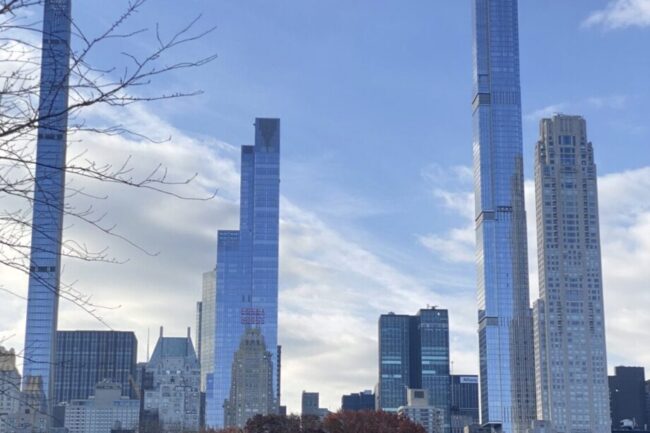
Another key feature of the New York real estate market is its diversity of property types.From high-rise condominiums to brownstones to lofts, there is a huge range of options.This diversity is a significant distinction from the single-family-centric market of Los Angeles or the apartment-centric market of Chicago, even within the same American market.
High-rise condominiums are an iconic part of the Manhattan skyline.Combining state-of-the-art amenities and spectacular views, these properties are highly sought after by high-income families and foreign investors.Brownstones (sandstone *sagan), on the other hand, are brownstone homes built in the late 19th and early 20th centuries and are popular as properties that embody the history and culture of New York City.

Pictured are a number of brownstone homes found in the West Village, New York, many of which were built in the 1800s.
Also, lofts converted from former factories and warehouses are favored by artists and creative industry workers for their high ceilings and spaciousness.These properties offer more than just living space and provide an exceptional investment opportunity unique to New York City.

These are also common in Brooklyn.
This variety of property types provides investors with a wide range of choices, while at the same time increasing the market’s resistance to change.For example, if demand for one particular property type declines, other property types can compensate, making the market as a whole more stable.
Citation: [6] StreetEasy New York City Real Estate Market Reports
The author (representative: Onodera) has lived in one of these properties and can speak about each of these values from his own experience.Please feel free to contact us.
5. high transaction costs and market transparency

Other aspects include high transaction costs and a high degree of market transparency.
First, let’s look at transaction costs.Real estate transaction taxes in New York City and the state are high compared to many other cities.For example, a purchase of a $1 million property incurs a transaction tax of approximately 2-3%[7] .This is not a small amount.In addition, in New York, real estate transactions require the involvement of an attorney, another factor that drives up transaction costs.
These high transaction costs have the effect of discouraging short-term speculative transactions and encouraging investors to take a long-term view.Investors are required to make more prudent investment decisions and long-term holding strategies to recover these costs.
On the other hand, the New York real estate market is also known for its transparency.Transaction information is highly public, which helps to improve the accuracy of investment decisions.For example, historical transaction prices and rental information are relatively easy to obtain, allowing investors to get a more accurate picture of the market.
While many Japanese real estate investments are characterized by the absence of historical transaction data, in the U.S., all transaction data is stored and disclosed in a database, along with the value, making it a highly transparent market.strong>.
In addition, detailed market reports from major real estate companies and research organizations are regularly published, and these are important sources of information for investment decisions.These reports provide information on regional price trends, rent levels, and vacancy rates, which investors can use to make more informed decisions.
This high level of transparency is one of the factors that enhance the credibility of the New York real estate market and attract both domestic and foreign investors.Especially for international investors, the availability of such detailed market information is a great help in making investment decisions.
Cited by: [7] New York City Department of HousingPreservation and Development 6.
6. association with sophisticated financial products

Another characteristic of the New York real estate market is its close association with sophisticated financial products.This is deeply connected to the fact that New York is one of the world’s leading financial centers.
Of particular note is the presence of REITs (real estate investment trusts).New York is home to many major REITs, and these REITs have a significant impact on the New York real estate market; REITs allow even small investors to participate in real estate investment by securitizing real estate[8] .Individual investors are able to invest in the New York real estate market not only through direct real estate ownership, but also indirectly through these REITs.
Derivative products based on New York real estate price indexes are also traded.These are also used as hedging tools in the real estate market to help investors manage risk.For example, investors who want to hedge against the risk of falling real estate prices can use these derivatives.
In addition, commercial mortgage-backed securities (CMBS) are also important.Commercial real estate loans in New York are often securitized in the form of CMBS.This has increased the liquidity of real estate investments and allowed more investors to participate in the market.
The presence of these instruments has made the New York real estate market more sophisticated and liquid.They offer investors the opportunity to participate in the market in many ways other than direct real estate ownership.
Citing: [8]National Association of Realtors (NAR)
7. strict regulatory environment

Finally, another characteristic of the New York real estate market is the strict regulatory environment.While these regulations may seem like barriers to development and investment at first glance, they actually contribute to stabilizing and increasing real estate values.
First, New York City’s strict zoning laws serve to prevent unregulated development and protect existing property values[9] .For example, by preventing the sudden construction of high-rise buildings in residential areas, they protect the character and atmosphere of the area and enhance the stability of real estate values.
There are also strict building regulations such as height restrictions and floor-area ratio regulations.These regulations are factors that limit new supply and consequently protect the value of existing properties.Particularly in high-density urban areas such as Manhattan, these regulations have the effect of making new development more difficult and existing properties more scarce.
In addition, many neighborhoods have regulations protecting historic buildings.These regulations contribute to the preservation of New York City’s streetscapes and increase the rarity of properties with historic value, thereby maintaining and increasing their real estate values.For example, in neighborhoods such as Greenwich Village and SoHo, these regulations have helped preserve the unique atmosphere, which in turn has boosted property values throughout the area.
While these regulations may constrain development and investment in the short term, in the long term they contribute to maintaining and enhancing the stability and value of the real estate market.It is important for investors to fully understand these regulations and develop the best investment strategy under them.
Cited by: [9] New York City Department of City Planning (DCP)
Conclusion

In today’s globalized world, the New York real estate market is becoming increasingly important.As the center of the world economy, it will continue to attract both domestic and foreign investors.
Thank you for reading this article.
New York was the center of the world 100 years ago, is still the center of the world today, and will remain so 100 years from now.We hope you understand that investing in real estate in such New York City has the potential to bring great value.
Our company, Reinvent NY Inc, continues to support individuals and companies entering or relocating to the United States starting in 2019, offering comprehensive services to support all aspects of New York real estate investment.
We are the only Japanese and Japanese company to work with CORE, an American broker, to sell real estate.
The brokerage is boutique and has a small, 30-person team, but is the fifth largest in New York State in terms of transaction value, and its president, Sean Osher, is the No. 1 seller (out of 131,488) in New York State last year in terms of sales value.942M dollars (about 145 billion yen), which is the second highest number not only in NY state, but also in the nation.(5th in 2022, with a 10th place person within the same brokerage).Our representative, Mr. Onodera, originally belonged to this brokerage and is the only Japanese who works with them and has strong connections with the New York local community, which will be useful for real estate sales.
We would be happy to discuss your needs with you using the form below.
If you are considering immigrating to the U.S., or have a small investment amount, or have no track record or history in the U.S., please contact us with any questions you may have.We promise to provide you with a friendly and sincere service.More details are below.