
Hello everyone.
Thank you for visiting our site and for your interest in New York real estate among other real estate investments around the world.
In this article, , [Complete Guide to 2025] 15 US Credit Cards for Expatriates.From getting through the screening process to increasing your credit limit, I will be writing an article on the subject.
I will be explaining the following topics: cards that newcomers to the US should have at the beginning, understanding the logic of credit history, recommended cards after building a credit history, and whether individuals can have a corporate card.We hope you will stay with us until the end.
First, why is an American credit card strategy important?

In American life, credit cards are more than just a means of payment.
They play an important role in building FICO scores, renting property, leasing a car, and even as an emergency contact for your child’s school.And these are all knowledge games where knowing can be a great benefit.
The author has created a total of more than 20 credit cards since coming to the US as an expat in 2016.
We hope this article will help you choose the best credit card for you.
Challenges Faced by Expatriates with No Credit History

According to data from Experian, foreigners with no credit history in the US (for the US) are treated as “bad credit”.
This means that even if you have a good credit history in Japan, you will have to start from scratch in the US.
But don’t worry, folks.There are special advantages for expatriates on company assignment.
The U.S. Credit Card System

The U.S. credit card system has some very different characteristics from those in Japan.First, the concept of credit score is very important.Credit scores, called FICO scores, range from 300 to 850, with 740 and above being considered very good credit.
This score is composed of five factors: payment history (35%), amount of debt (30%), length of credit history (15%), new credit (10%), and type of credit (10%).
Also, redemption rates in the U.S. in the form of miles or points are much higher than in Japan, with rates of 2% to 5% not uncommon.
For example, the Platinum Card from American Express offers very attractive benefits, such as 5x points on airline ticket reservations and 10x points on luxury hotel reservations.
5 Tips for Building a Credit History

Building a credit history effectively requires a strategic approach.Below are some key points for success.
(1) Set up automatic payments
To ensure 100% monthly payments, set up automatic debits.This will prevent your score from dropping due to forgotten payments.In many cases, this can be easily set up through the credit card company’s website or app.
Also, U.S. credit cards have a default setting of installment payments like revolving payments.Interest rates are very high, around 20% per annum, so we recommend that you pay the entire balance each time as much as possible.
(ii) Control of Usage Limit
The ratio of actual usage to available credit (credit utilization) is an important factor in credit score calculation.Ideally, it is recommended to keep it below 30%.For example, if your limit is $10,000, try to keep your monthly spending under $3,000.
The following table summarizes the factors that affect your credit score and their importance.
| Factor | Severity | Recommended Action |
|---|---|---|
| Payment history | 35%. | Always pay on time |
| Debt ratio | 30 percent | Amount used is less than 30% of the credit limit |
| Credit history | 15%. | Build a long-term track record of transactions |
| New openings | 10% of the total | Avoid numerous applications in a short period of time |
| Type of credit | 10% of the total | Multiple types of credit |
*Importance of each factor in the FICO score calculation and recommended actions.
The bottom of the article also provides more details on what you need to do to improve your credit score.
Now that you have a better understanding of credit cards, we will discuss what credit cards you should start applying for as soon as possible.
Take advantage of special programs for expatriates

If you are new to the U.S. from Japan, you have no credit history.Paradoxically, you may think that you will not be able to get a credit card because you do not have a credit history.
But don’t worry.Some credit cards can issue cards based on your Japanese credit score and the creditworthiness of your company, even if you have no history.
For example, American Express is expanding its special screening program for expatriates by strengthening its partnership with its Japanese parent company beginning in 2024.
Under this program, Amex card usage history in Japan is taken into consideration, allowing for smooth card issuance in the US.
The initial limit is also set significantly higher than a typical new card issuance.
JAL and ANA USA Cards are recommended for building expatriate credit history

The ANA and JAL USA Cards are the most likely cards to be issued immediately, even with no credit history, because the card companies have ties to Japan.
The author applied for these cards from Japan when he decided to expatriate and was able to get another local credit card two months after arriving in the US.
The screening process for both cards takes into account your credit history in Japan and your status as an expatriate (type of work visa and company you belong to).In particular, expatriates from major companies tend to be screened more easily than regular U.S. credit cards.In addition, both cards offer excellent support in Japanese, so it is easy to ask for advice on how credit scores work and how to build a credit history.
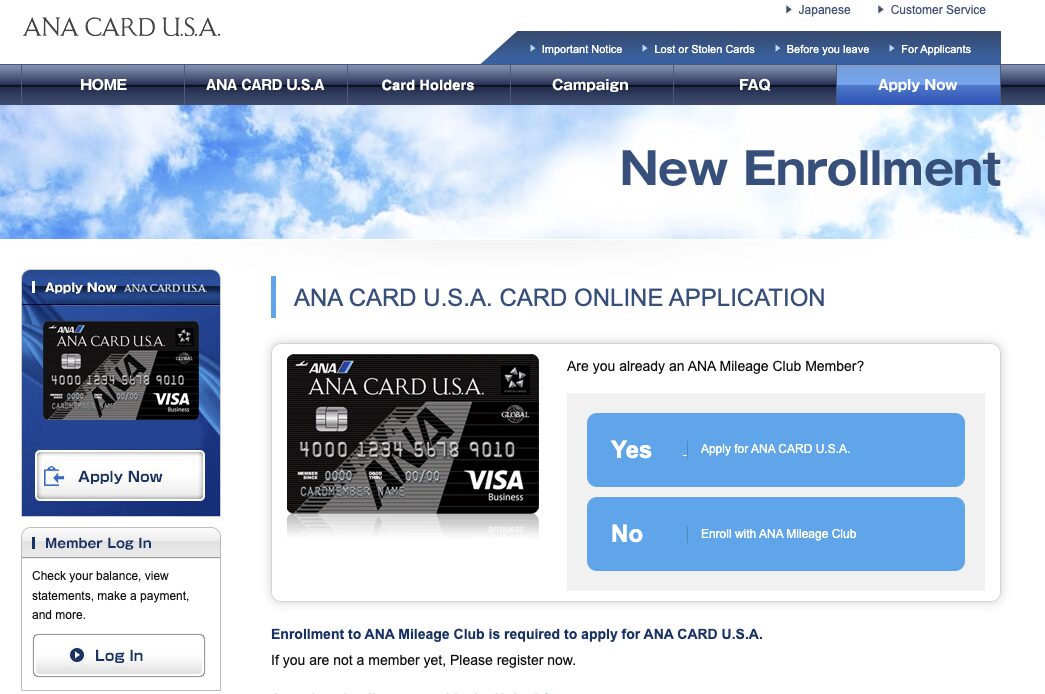
As a tip for building credit history, it is recommended to use these cards only for small payments (e.g., monthly utility bills) for the first six months to ensure that you make your payments.In particular, limiting use to no more than 30% of your credit limit will more effectively improve your credit score.Both cards allow you to build a basic credit history in about 6-12 months, as payment history is reliably reported to the credit bureaus each month.
It is worth noting that once you have built a good payment history with these cards, it is relatively easy to obtain additional cards from major US card companies.For example, this is a very effective stepping stone to obtaining a premium card with a high redemption rate, such as Chase Sapphire or Amex Platinum.Many expatriates choose these cards as their first choice and lay the foundation for their subsequent credit life.
If you have a spouse, you can also apply for additional cards at the same time to efficiently build a credit history for the entire family.
Detailed Comparison of JAL and ANA USA Cards
| Item | JAL USA Card | ANA USA Card |
|---|---|---|
| Card Type | JAL USA CARD (General Card) ・JAL USA CARD Platinum ・JAL Global Wallet |
ANA Business Card (First Card) ・ANA Corporate Card (Business Card) ・ANA Digital Card (Digital Card) |
| Annual Fee | General Card: $50 – Platinum: $150 – Global Wallet: $45 |
Business: $150 Corporate: $95 Digital: $70 |
| Mileage earning rate | JAL flights: 3 miles/$1 ・Others: 1 mile/$1 ・Bonus miles: Up to 10,000 miles (membership bonus) |
ANA flights: 2 miles/$1 ・Others: 1 mile/$1 ・Bonus miles: up to 5,000 miles (sign-up bonus) |
| Airport Privileges | Two pieces of baggage free (international flights) ・Priority check-in ・Sakura lounge discount ・JAL ABC discount |
Free baggage (international flights) – Priority check-in – Discounted access to ANA lounge – Priority security lane access (some airports) |
| Flight Privileges | Discounts on domestic flights (specific routes) – Discounts on international flights (JAL Group flights) – Preferential JGC points – Advance booking of award tickets |
Preferential upgrade rates for domestic flights – Discounts on international flights (seasonal) – Extended mileage validity – Priority booking of award tickets |
| Insurance Benefits | Travel insurance (up to $1,000,000) – Baggage delay insurance (up to $500) – Flight delay insurance – Car rental insurance |
Travel insurance (up to $500,000) -Baggage delay insurance (up to $300) -Cancellation insurance -Car rental insurance |
| Distinctive Privileges | JMB WAON point conversion – JAL Global Club benefits – oneworld benefits – JAL Card in Japan ・Airline partner benefits in the U.S. |
ANA SKY Coins – ANA Global Service – Star Alliance Awards – Centralized mileage account management Centralized management of mileage accounts – Redeemable for US domestic flights |
| Partner Benefits | 25% discount on Avis rental cars – Discount on international hotel chains – Discount on airport lounges – Linkage with JAL Card benefits in Japan |
15% discount on Hertz rental cars – Discounts for hotel partners (up to 30%) – Discounts on airport transfers – Linkage with ANA Card benefits in Japan |
| Application Requirements | U.S. resident – Valid SSN or ITIN – Annual income of $40,000 or more – Minimum credit score of 670 recommended |
U.S. resident – Valid SSN or ITIN – Annual income of $45,000 or more – Credit score of 680 or more recommended |
| Benefits | High mileage earning rate ・High insurance coverage ・Strong global coverage ・Strong business coverage ・Long validity ・Strong business coverage |
Miles can be used at Star Alliance member stores -Long validity -Strong business use -Advantages of domestic flight awards |
| Disadvantages | Strict minimum annual income requirements – Restrictions on some benefits in Japan – Effect of exchange rate fluctuations – High Platinum Card annual fee |
Slightly higher annual fee -Less sign-up bonus -Pay for lounge access -Limited general card benefits |
Information is current as of November 2024.
*The benefits are subject to change without notice.
*Please check the card issuer’s latest terms and conditions for actual benefits and conditions.
*Benefit details are current as of November 2024.
*Both cards are designed specifically for Japanese expatriates and business people living in the US.
* Please check the latest terms and conditions of each card issuer for detailed benefits and conditions.
The main features of these cards are as follows
1. benefit design for frequent travelers between Japan and the U.S.
2. linkage with Japanese airline mileage program
3. insurance services for U.S. residents
4. customer support in Japanese
5.Customer support in Japanese
5.
Notably, both cards offer a full range of benefits when returning to Japan, and are designed to be especially useful for long-term expatriates and permanent residents returning to Japan.
There are also several other bank cards.
Credit cards integrated with bank transactions

JP Morgan Chase Bank offers comprehensive financial services for expatriates in connection with corporate accounts.
Along with opening a payroll transfer account, the bank will also consider issuing good cards such as Sapphire Preferred and Freedom Flex.
Of particular note is the Executive Banking Program, which was introduced in 2024.
Under this program, the normally required credit score requirements are relaxed, making it easier to obtain higher lines of credit.
Citibank’s Special Program for Expatriates

Citibank has a long history of providing expatriate services to Japanese companies.
In particular, the premium card program for “Citigold” account holders allows them to access high-end credit cards immediately upon arrival in the United States.
Starting in 2024, the card will also offer Priority Pass and Global Entry annual fee benefits, greatly increasing convenience for business and family travelers.
The WalletHub analysis reveals the best credit card combinations for expatriate families’ lifestyle patterns.
For example, the Chase Sapphire Reserve has a hefty annual fee of $550, but with airport lounge access and generous travel insurance, it is designed to pay for itself on a temporary or business trip back to Japan.
Strategic Use of the Store Credit Card

Credit cards issued by major U.S. retailers are also worth using wisely.
Cards from Whole Foods Market and Target are relatively easy to qualify for and effective for building credit history.
The Amazon Prime Rewards Visa card, in particular, offers a 5% cash back at Whole Foods as well as a high rate of return on purchases of imported goods from Japan.
Now, this has been an introduction to U.S. credit cards.From here, after your credit history has been built, we will explain our recommendations for cards in all areas.
The list below is a summary of these recommendations.
15 Recommended Credit Card Rankings: Comparison of Benefits
| Rank | Card name | Annual Fee | Enrollment Bonus | Point Redemption Rewards | Annual Credit Rewards | Airport & Transit Rewards | Hotel Benefits | Other valuable benefits | Recommended Users |
|---|---|---|---|---|---|---|---|---|---|
| 1st place | Amex Platinum Card | $695 | 80,000 points ($6,000/6 months use) |
– 5x airfare – 5x hotel – 1x other |
– Uber $200 – Airline incidental expenses $200 – Saks $100 – Entertainment $240 ・Saks $200 |
– Centurion Lounge – Priority Pass – Delta Sky Club CLEAR $189 |
FHR $100 award – Hilton Gold – Marriott Gold – $200 hotel credit |
Concierge Equinox $300 – Walmart+ – Insurance |
No.1 overall! Especially for frequent business travelers |
| 2nd place | Chase Sapphire Reserve | $550 | 60,000 points ($4,000/3 months use) |
-10x travel -3x food and beverage -1x other |
– Travel Credit $300 – DoorDash $5/month – Instacart $15/month |
Priority Pass – TSA PreCheck – Airport Restaurant Access – Lyft Pink |
Luxury Collection – Breakfast privileges – Upgrade priority – Late check-out |
Primary insurance – Trip protection – VIP events – Priority restaurant reservations |
Enjoy luxury travel for the wealthy |
| 3rd place | Capital One Venture X | $395 | 75,000 miles ($4,000/3 months use) |
Travel Portal 10x – Hotels 5x – Others 2x |
Travel Credit $300 – Bonus 10,000 miles – Free additional card |
Capital One Lounge – Priority Pass – Plaza Premium – TSA PreCheck |
Premier Collection -$100 Facility Credit -Breakfast Rewards -Upgradeable |
Hertz President – Various travel insurance – Personal effects insurance – Booking protection |
Advanced cosmetic For |
| 4th place | Amex Business Platinum | $695 | 120,000 points ($15,000/3 months use) |
5x airfare -1.5x over $5,000 -1x other |
– Dell $400 – Airlines $200 – Indeed $360 – Wireless120 |
– Centurion Lounge – Priority Pass – Delta Sky Club CLEAR |
FHR Rewards – Marriott Gold – Hilton Gold – Hotel discounts |
Adobe $150 – WeWork benefits – Business insurance – Concierge |
For companies with large expense accounts . |
| 5th place | Marriott Bonvoy Brilliant | $650 | 95,000 points ($5,000/3 months use) |
Marriott 6x – Airlines 3x – Restaurants 3x – Other 2x |
– Marriott $300 – Free Night Award – Priority Pass |
TSA PreCheck – Airport Lounge – Priority Check-in – Baggage Priority |
Platinum Elite – $100 credit – Guaranteed upgrade – Late check-out |
– 25 Elite Nights – Dedicated reservation line – Travel insurance – Event special offers |
Marriott Group For regular guests |
| 6th place | Delta Reserve Card | $550 | 90,000 miles ($6,000/6 months use) |
3x Delta purchase – 2x direct booking – 1x other |
One companion ticket per year -Free baggage -$100 TSA PreCheck |
Delta Sky Club – Centurion Lounge – Priority boarding – Upgrade priority |
Delta Vacations – Accommodation insurance – Free mileage transfer – Free hotel reservations – Delta Vacations |
Free Miles Transfer – Status Boost – MQD Waiver – Event Discounts |
Delta Air Lines Patron for |
| 7th place | Amex Gold Card | $375 | 60,000 points ($4,000/6 months use) |
– 4x restaurant – 4x supermarket – 3x airline |
– Uber $120 – Dining $120 – Rewards Dining |
Baggage insurance -Airfare discounts -Car rental discounts |
-Hotel Collection -$100 credit -2-night minimum stay benefit |
Purchase protection – Event tickets – Return protection – Travel insurance |
For frequent restaurant users . |
| 8th place | Chase Ink Business Preferred | $95 | 100,000 points ($15,000/3 months use) |
3x business travel – 3x advertising – 3x shipping |
Cell phone insurance – Annual redemption limit of 150,000p |
Trip insurance – Baggage delay insurance – Emergency support |
Chase Travel discounts – Hotel discounts – Reservation protection |
Complimentary employee card – Purchase protection – Fraud protection – Business benefits |
Balanced Business Card |
| 9th place | United Club Infinite | $525 | 80,000 miles ($5,000/3 months use) |
United 4x – 2x travel – 1x other |
United Club membership -2 free baggage allowance -TSA PreCheck |
Priority check-in – Priority boarding – Upgrade priority – Lounge access |
IHG Platinum – Luxury Hotel benefits – Hotel discounts |
Hertz benefits – Travel insurance – No expiration of miles – Special offers for events |
For frequent flyers of United Airlines . |
| 10th place | Hilton Honors Aspire. | $450 | 150,000 points ($4,000/3 months use) |
– Hilton 14x – Restaurant 7x – Air 7x |
Resort $250 -Air $250 -Free Night Award |
Priority Pass – TSA PreCheck – Airport Transfer Discount |
Diamond Membership – Complimentary breakfast – Upgrade – $100 credit |
ShopRunner -Golf Rewards -Concert Benefits -Insurance Package |
Hilton Hotels for patrons |
| 11th place | Capital One Spark Cash Plus | $150 | $1,000 cash ($8,000/3 months usage) |
– 2% of all purchases – Annual spending bonus |
Annual $200 Bonus – Spending Linked Bonus |
Spring Expense Management – Travel Management Tools – Reporting |
Capital Travel -Hotel booking discounts -Cancellation protection |
Free employee card – Purchase protection – Extended warranty – Expense management |
Cost-effective for business |
| 12th place | Citi Premier Card | $95 | 60,000 points ($4,000/3 months use) |
3x Air – 3x Hotel – 3x Restaurant |
Hotels $100 – Annual Awards |
World Elite Benefits – Car rental insurance – Trip protection |
Hotels.com Discount – Booking Protection – Special Rates |
ShopRunner – Mastercard rewards – Concert benefits – Purchase protection |
Balanced for managers |
| 13th. | Amazon Prime Rewards Visa | $0* | $150 gift card (immediate grant) |
– Amazon 5% – Whole Foods 5% – Food and Beverage 2%. |
Prime member benefits -Exclusive sale participation |
Baggage insurance – Car rental insurance – Travel insurance |
Amazon Travel – Hotel Booking Privileges |
Purchase Protection – Extended Warranty – 0% Interest Rewards – Return Protection |
Amazon/Whole Foods For Heavy Users |
| 14th. | Amex Blue Business Plus | $0 | 15,000 points ($3,000/3 months use) |
– All purchases 2x – Up to $50,000 |
Expense management tools – Payment flexibility |
Baggage insurance – Business travel management – Car rental insurance |
Amex Travel – Hotel discounts – Reservation protection |
Purchase protection – Employee cards – Expense analysis – Extended warranty |
0 annual fee for startups |
| 15th. | Chase Freedom Unlimited | $0 | 200 cash ($500/3 months use) |
Travel 5% -Food and Beverage 3% -Pharmacy 3%. |
Cash Back rewards -Shopping protection |
Travel insurance – Baggage insurance – Car rental insurance |
Chase Travel – Hotel reservation discounts – Special rates |
Purchase protection – Extended warranty – Fraud protection – Return protection |
First time for US cards |
Clicking on the name of the card will take you directly to the card application site.
If the card does not appear with bonus points due to a referral offer, the bonus points will be applied when you fly to the appropriate card on the site to which you are transferred.
*Information is current as of December 2024.
**Benefits are subject to change without notice.
**Amazon Prime Rewards Visa has a $0 annual fee but requires an Amazon Prime membership ($139 per year).
* *Please check the card issuer’s latest terms and conditions for detailed terms and conditions of each offer.
In addition, many people who travel a lot or drive a lot on business may need a card with car rental insurance.
Below is a comparison of credit cards with car rental insurance.
Comparison of credit cards with car rental insurance
| Rank | Card name | Annual Fee | Enrollment Bonus (Terms and Conditions) |
Type of Insurance | Coverage | Maximum Amount Covered | Period of Insurance | Special Notes |
|---|---|---|---|---|---|---|---|---|
| 1st. | Chase Sapphire Reserve | $550 | 60,000 points ($4,000/3 months) |
Primary coverage | Vehicle Damage – Theft – Personal Injury – Property Damage – Towing Costs |
Vehicle damage: up to $75,000 – Personal injury: up to $1,000,000 – Property damage: up to $1,000,000 |
Up to 31 days | Coverage at home and abroad ・Coverage for luxury cars |
| 2nd place | Amex Platinum Card | $695 | 80,000 points ($6,000/6 months) |
Secondary coverage ( primary available with Premium Car Rental Protection subscription) |
Vehicle Damage – Theft – Bodily Injury – Personal Liability |
Vehicle damage: up to $85,000 – Personal injury: up to $500,000 – Personal liability: up to $1,000,000 |
Up to 30 days | Paid upgrades available -Luxury cars limited |
| 5th. | United Club Infinite | $525 | 80,000 miles ($5,000/3 months) |
Primary Coverage | Vehicle Damage – Theft – Personal Injury – Property Damage |
Vehicle damage: up to $75,000 – Personal injury: up to $750,000 – Property damage: up to $750,000 |
Up to 15 days | Preferential treatment for United reservations ・Preferential treatment for international flights |
| 6th place | Amex Business Platinum | $695 | 120,000 points ($15,000/3 months) |
Secondary coverage | Vehicle damage – Theft – Personal injury – Property damage |
Vehicle damage: up to $85,000 – Personal injury: up to $500,000 – Property damage: up to $1,000,000 |
Up to 30 days | Business use only -Luxury car limit |
| 7th place | Marriott Bonvoy Brilliant | $650 | 95,000 points ($5,000/3 months) |
Secondary coverage | Vehicle damage – Theft – Property damage |
Vehicle damage: up to $50,000 – Property damage: up to $500,000 |
Up to 30 days | Preferential with Marriott reservations – General vehicles only |
| 8th. | Capital One Spark Cash Plus | $150 | $1,000 cash ($8,000/3 months) |
Primary Coverage | Vehicle damage – Theft – Property damage |
Vehicle damage: up to $50,000 – Property damage: up to $500,000 |
Up to 15 days | -Business use also available -General vehicles only |
*Information is current as of November 2024.
*Coverage may vary by country, region and car rental company.
* Actual coverage requires confirmation of the card company’s terms and conditions.
In addition, the following points should be noted when using a card with insurance coverage.
Important points to note regarding rental car insurance with credit cards

1. the difference between primary and secondary coverage:
– Primary: Directly compensated by the insurance attached to the card without using personal auto insurance
– Secondary: Directly compensated by the insurance attached to the card without using personal auto insuranceSecondary: Use your personal auto insurance as a priority and compensate for the shortfall with the insurance attached to the card.
2. general exclusion of coverage:
– luxury cars (except some cards)
– vans, trucks
– Motorcycles
– Antique cars
– Off-road vehicles
3. conditions for receiving compensation:
– pay the vehicle rental fee in full by credit card
– the driver is a cardholder
– Decline compensation from the rental company
– Comply with the terms of the rental agreement
4. country specific notes:
– may not apply in Australia, Italy and New Zealand
– Ireland, Israel and Jamaicain Ireland, Israel and Jamaica, you must be insured by the rental company
– In Mexico, coverage is limited by local law.
As you can see, coverage and conditions vary widely from card to card, so it is recommended that you check the details before using the rental car.
Five Major Components of Credit Score and Points to Note
Your credit score is an important indicator of your quality of life in the U.S. The primary credit score, called the FICO score, is composed of the following five elements.Each component is described in detail below with actions that can raise or lower your score.
| Components | Specific Gravity | Actions to Increase Score | Actions to Lower Score | Important Notes |
|---|---|---|---|---|
| 1. payment history (Payment History) |
35% of all payments | On-time and reliable payments -Automatic withdrawal set up -Minimum payment or more -Long-term good payment record |
Late payments – Delinquent payments – Defaults – Bankruptcy filing |
A delay of 30 days or more will remain on record for 7 years – Bankruptcy will remain on record for 10 years – Even a single delay will have a significant impact |
| 2. debt ratio (Credit Utilization) |
30% (Credit Utilization) | Maintain spending below 30% of limit ・Diversified use of multiple cards ・Application for limit increase ・Early repayment after high spending ・High spending on multiple cards ・High spending on multiple cards |
Use of a card close to the limit ・High use of multiple cards ・Constant use of revolving credit ・Excessive use of credit limit |
Usage rate at the close of each month’s billing cycle is important ・Even if immediate repayment is made, the month-end balance is reported ・Ideal usage rate is less than 10%. |
| 3. length of credit history (Length of History) |
15% (Length of History) | Continued use of old cards ・Regularly small spending ・Maintaining oldest card ・Long average holding period |
Cancellation of the oldest card – Frequent opening of new cards – Long-term non-use – Suspension by the credit card company |
Never cancel the oldest card – Use more than once a year is recommended – Average holding period of 5 years or more is ideal |
| New Credit (New Credit) |
10% of the total amount of credit | New applications are limited to 1-2 times per year – Planned applications – Use of pre-screening – Applications at appropriate intervals |
Multiple applications in a short period of time – Frequent credit checks – Applications at inappropriate times – Repeated failures |
Hard pulls (main credit checks) remain on record for 2 years ・Count 1 mortgage review in the same period ・Applications should be at least 6 months apart. |
| 5. credit type (Credit Mix) |
10% (Credit Mix) | -Holding multiple types of credit -Adding a mortgage -Using auto loans -Paying off student loans appropriately |
Only a single type of credit – Extensive use of high risk loans – Use of payday loans – Non-payment of collateral loans |
Balance between revolving (cards) and installment payments (loans) – Unreasonable loan agreements are counterproductive – Planning according to repayment capacity is important |
The following actions need to be taken with care.
Behaviors that lower your score that require special attention.

1. serious credit-destroying behavior:
– filing for bankruptcy (Chapter 7/13)
– debt consolidation
– Unpaid taxes
– Wage garnishment
These remain on record for 7-10 years and are very difficult to recover.
2. routine precautions:
– apply for multiple cards at the same time
– spend up to your credit limit
– Continuing to pay only the minimum payment
– Repeatedly canceling and opening cards
– Late payment of utility bills
3. unexpected pitfalls:
– securing a limit for a rental car deposit
– credit screening for a cell phone contract
– Credit screening for apartment contracts
– Background screening for employment
These can also affect your credit score.
Credit scores take time to recover, but once built, a good score can benefit you in many ways, including loans with more favorable terms, better property rentals, and more favorable employment conditions.It is especially important for expatriates to be aware of these factors and plan accordingly, as they need to build their score efficiently within the limited time they have to stay in the country.
How long it takes to improve your credit score

According to data from Credit Karma, it typically takes 6-12 months to improve credit scores.
Emergency Preparedness and Security

Credit card security is also important to consider: as of 2024, card fraud is becoming increasingly sophisticated.
The Federal Trade Commission has reported an increase in fraud targeting foreigners in particular.
While U.S. credit cards offer generous compensation for fraudulent use, identity authentication may not be as strict as in Japan.
Therefore, real-time usage notification settings (available on the Amex and Chase mobile apps, which the author also makes mandatory) and the use of digital wallets such as ApplePay and Google Pay can also be effective in enhancing security.The use of these touch payments has also been recommended in recent years for situations where the card is out of sight, such as paying at a restaurant.
Use of corporate and personal cards

In a little-known case, individuals can also have a corporate card.
Normally, corporations and individuals are considered to be separate, and corporate credit balances, etc. are not considered to have an impact on individuals, but in some cases they can, so care should be taken.
Especially in business accounts, the American Express Corporate Card, which offers a large sign-up bonus and other benefits, is said in many cases not to contribute to building an individual’s credit history, and isIt is one of the most popular cards for sole proprietors.
In any case, it is important to strategically use different cards for individuals and corporations.
Credit Cards and Tax Filing

Under Internal Revenue Service (IRS) regulations, credit card usage history is an important voucher for expense reimbursement and tax returns.
Especially for expatriates filing tax returns, credit card statements are an important document to prove the actual living expenses.
What to do when returning to your country of residence

It is also important to take action when you decide to return to Japan.According to TransUnion, your credit history in the U.S. may be advantageous for future relocations to the U.S. or to other countries.
Therefore, one option is to consider downgrading to a no annual fee card rather than canceling the card altogether.
Conclusion

The use of credit cards in the U.S. is more than just a means of payment; it has strategic significance.
For expatriates in particular, it is important not only to improve convenience during the assignment period, but also to build a foundation for future global financial activities.
By understanding the characteristics of various cards and finding the best combination to suit your own lifestyle pattern, you can realize a more efficient and comfortable life in the United States.
Thank you for reading this article.
Our company, Reinvent NY Inc, continues to assist individuals, companies, and expatriates who are expanding or moving to the United States in 2019, providing comprehensive services to support all aspects of New York real estate brokerage.We also provide a comprehensive service to support all aspects of real estate brokerage in New York City.
We also offer the “NY Everything Consultation Service,” which allows expatriates to consult with us at their convenience.
We will help you with any concerns you may have before you go to New York.
We can assist you in finding a place to live in New York City.
Assistance with renewals and moving within New York City.
We can consult with you about your career, business, entrepreneurship, and visa issues after you move to New York City.
We are the only company where you can consult with a representative who is a former expatriate.
If you have any of these problems, please feel free to contact us.
Please feel free to contact us by filling out the form below.